


The Part of the Season…Nobody Posts About
The days and weeks after the holidays can feel strangely… quiet. Not the peaceful kind. More like the kind where your body finally realizes it’s allowed to exhale. So it does, all at once.
You realize you’ve been holding. Like, a lot.
It’s the part of the season nobody wants to post about. When all the lights go down, the family leaves, and you’re left holding the emotional, physical and spiritual toll.

Maybe you’re feeling more tired than you “should” be right now.
Your digestion is moody, your skin feels sensitive, sleep is off, and your brain won’t fully come online.
Or, maybe your emotions are right there…ready to surface at a moment’s notice; teary-eyed in the grocery store, irritated with your partner for no reason, weirdly flat at work, or suddenly grieving something you can’t quite name.
It’s not even dramatic. It’s just that subtle feeling of being a few inches outside yourself.
A bit floaty, out-of-body, not really here.
And if you’re highly sensitive or neurodivergent, this makes so much sense. The holidays are intense in a way that less sensitive people will probably never fully understand.
I mean, we’re talking…
…extra stimulation, shifting schedules, “social” energy, super loud and bright environments, richer foods, extra decision-making, just “holding it all together” energy, and the feeling like you have to perform wellness or gratitude or cheer.
Even the good stuff can be a lot.
And if you’re a recovering perfectionist (or someone who has lived through multiple burnout cycles), this is also the time of year when you might feel the pressure start kicking in. The intense parts of you who want to turn this situation (aka you) into a project.
A “clean” reset.
A perfectly designed January.
A ten-point overhaul plan to fix your sleep, fix your gut, fix your energy, fix your feelings, fix your entire life… fast!
But honestly, friend, is this what you really need rn?
Your body probably isn’t asking for a makeover. It’s asking for a gentler return. Not a “start over,” not a punishment, not a rigid routine you can’t sustain. Not another planner. Just a chance to reset itself and breathe. Breatheee.
Can we slow down? Can we listen? Can we re-enter our life at a pace that feels safe? Can we support digestion and energy without control? Can we regulate without needing to be “better” first?
I get it, you’re in that awkward in-between moment after the holiday surge, when you’re tender and a little raw and you just want to feel steady again, but you’re overwhelmed.
You just need a little space for yourself.
Time to put your needs first.
And it’s not because you’re behind… but because you just need to come back to yourself in a way that restores your life force and hits the reset button after a season of doing for others.
If you’re hearing me and it’s hitting home, (or you’re lowkey feeling a bit called out), our next Sanctuary Circle on Monday, may be just the support and space you need.
Come join us in circle (deets below).
Holistic Holiday Reset & Rejuvenation for the Sensitive Mind-Body with Leah


Holistic Holiday Reset for the Sensitive Mind-Body with Leah
Date: Monday, January 12
Time: 6:30–7:45 PM ET
A soft post-holiday season recalibration and rejuvenation circle for sensitive and neurodivergent humans; grounding somatic practices, simple nourishment rhythms, tips and tricks for self-care, and compassionate body check-ins to help you settle back into steadiness. Save your spot by clicking the button below.
Can’t make it to circle? Subscribers of The Nourished Sensitive Magazine receive access to a library of all the live circle replays, tools, and resources, to peruse on their own time.
Wanna try on your own first? Keep reading for a few embodiment principles and practices to help you holistically reset and rejuvenate after your busy holiday season.
What a “Reset” Actually Means for Sensitive Systems
Before we talk about tools or practices, it helps to pause and name something important: many of us learned that a “reset” is supposed to feel motivating. Energizing. Clean. Like flipping a switch and suddenly being ready for more.
But our bodies don’t really work like that.

For sensitive and neurodivergent bodies, a true reset often feels quieter than that. Perhaps a better word to describe this process might be rejuvenation.
Rejuvenate (transitive verb) the phenomenon of vitality and freshness being restored
Thesaurus Nerds – revitalize, restore, invigorate, regenerate, enliven, brighten, spark, reanimate, uplift, freshen, recondition, resuscitate, rehabilitate, rekindle.
Where resetting can feel external, rejuvenation is more internal. Sometimes it’s even a little uncomfortable at first because it asks us to stop overriding our signals and actually listen to them.
It asks us to put ourselves…before others.
And if you’ve ever told yourself, “I should be over this by now,” or “Everyone else seems fine. Why am I still tired?”, this message is especially for you.
Nothing is wrong with you for need this. Your system is different, and it’s simply asking for a different kind of care than the one that’s usually offered this time of year.
It’s asking for those synonyms I listed above.
revitalize, restore, invigorate, regenerate, enliven, brighten, spark, reanimate, uplift, freshen, recondition, resuscitate, rehabilitate, rekindle.
Keep reading if you want to embody those words…
Embodiment Insight 1: Sensitivity doesn’t end when the holidays do (+ a simple embodiment practice to try).
For sensitive systems, stimulation doesn’t shut off just because the season is over. It accumulates quietly; in conversations you held space for, in the environments you adapted to, in the routines that dissolved, in the meals that felt different than usual, in the expectations you tried to meet.

For the sensitive mind-body, the impact often lands later.
Once things calm down, and your body finally has room to respond. That’s when the fatigue, fog, or emotional tenderness shows up.
This isn’t regression. It’s a delayed exhale. A nervous system saying, “Okay, now I can feel this.”
Embodiment Practice: The Anchoring Exhale
Find a comfortable seat or stand and let your weight be supported. Soften your shoulders, jaw, and belly. Gently notice where your body is still holding something — heaviness, tightness, buzzing, or tenderness. Place one hand there. Take a slow breath in through your nose. Then sigh it out through your mouth, longer than the inhale.
Repeat 3–5 times, silently saying:
“It’s safe to let this move now.”
You might notice a yawn, emotion, warmth, or nothing at all. Whatever happens is okay. Stay with the sensation for a few breaths.
To close, gently look around and name:
3 things you can see
2 things you can feel
1 sound you can hear
Let your nervous system register:
I am here. This exhale is allowed.
Embodiment Insight 2: Digestion, energy, and emotions are always in conversation
Many sensitive people notice the post-holiday effects first through the body: bloating or sluggish digestion, inconsistent appetite, low energy, disrupted sleep, or emotions that feel closer to the surface than usual.
These aren’t separate issues. Your nervous system, digestive system, and emotional world are deeply intertwined through the magic of the brain-gut connection and the vagus nerve.
When one is overwhelmed, the others respond.

In this circle, one thing we’ll touch on is how sensitivity affects digestion and stress after the holidays, and gently reconnect with nourishment rhythms such as:
eating in a way that feels grounding and regulating, rather than reactive or restrictive
tuning into hunger, fullness, and sensory cues without pressure to “do it right”
choosing foods, timing, and pacing that support steadier energy throughout the day
creating simple, repeatable rhythms that help your body feel safe and supported
softening the emotional charge around food so nourishment feels like care, not control
These aren’t rules to follow or habits to perfect. Just invitations to listen and respond to what your body is already communicating.
As you read this, where do you feel the season lingering most—in your gut, your energy, your mood, or your sense of grounding?
Key Insight 3: Regulation doesn’t have to look like discipline
If you’ve lived through burnout or have always been a bit of a perfectionist about things, you may have learned to regulate yourself through more effort: stricter routines, tighter control, pushing through discomfort, “being good.”
Setting way too high of a New Year’s resolution.
But sensitive systems don’t settle through force. They settle through safety.
Somatic practices can be surprisingly powerful, not because you do them perfectly, but because they give your body a clear message: you’re here, you’re supported, you don’t have to brace so hard.

Here are a few of the kinds of practices we’ll explore (the simple, doable ones, the ones you can actually return to on a normal day):
Orienting (a gentle “where am I?” reset):
This is the practice of slowly looking around the room and letting your eyes land on what feels neutral or pleasant: light through a window, a familiar object, a soft color. It sounds almost too simple, but it helps your nervous system register present safety instead of staying stuck in “go-go-go” mode.Grounding through the senses (coming back into your body without forcing it):
When you feel floaty, foggy, or scattered, grounding can look like noticing the weight of your feet, the texture of your clothing, the temperature of a mug in your hands. Not as a performance. Just as a small return. Like tapping your shoulder and saying, hey, I’m here.Breath that doesn’t demand calm (because “just breathe” is annoying sometimes):
Instead of forcing deep breaths, we’ll work with softer pattern, like lengthening the exhale a little, or breathing into the back of the ribs, so your body can unwind without feeling bossed around. This is especially supportive if deep breathing ever makes you feel more panicky or pressured.Compassionate body check-ins (listening without spiraling):
A lot of sensitive people scan their bodies and immediately judge what they find: Why am I tired? Why am I bloated? Why can’t I handle this? A somatic check-in is different. It’s more like, What’s here today? What might help? It turns your body from a problem into a partner.Gentle movement for discharge (because stuck energy needs somewhere to go):
Sometimes regulation isn’t about stillness. It’s about letting the body complete a stress cycle. That might look like shaking out your hands, slow stretching, rocking, or a few minutes of intuitive movement. Especially after a season where you’ve been holding a lot in.
None of these are meant to “fix” you. They’re more like small doorways. Ways to meet yourself with steadiness when your system feels overstimulated, tender, or a few steps behind the pace of life.
Here’s something you can reflect on:
What would change if your reset didn’t require willpower?
Embodiment Insight 4: Your capacity right now is not a problem to solve
One of the hardest parts of post-holiday recovery is accepting that your capacity may be lower than usual. You might need more rest. More simplicity. Fewer inputs. More space between things.
You might need to be a bit more “it’s all about me” right now.
It’s not just okay to be that, it’s often necessary.

Taking time for you doesn’t have to mean you’re lazy, unmotivated, or “falling behind.” It can mean you’re just giving your system what it needs to recalibrate and restore itself.
A sensitive-friendly reset honors what’s actually available—today, this week, in this body—rather than chasing an ideal version of yourself.
In this space, capacity is information, not a flaw.
A slower, kinder way to come back online
This in-between season holds a quiet invitation. The rush has passed, but your body is still integrating. Catching up, settling down, asking for softer edges.
What helps most right now usually isn’t a big overhaul. It’s small supportive shifts that ease overstimulation and sensory fatigue: simple rituals you can actually keep, gentle check-ins that bring you back to steadiness, and a pace that respects your real capacity.
This is embodiment in practice: learning your body’s language again, and letting it guide the next step instead of the calendar.
You don’t need to snap back.
You don’t need to “do January right.”
You’re allowed to return slowly and let that be enough.
Exploring Element 7: Embodiment
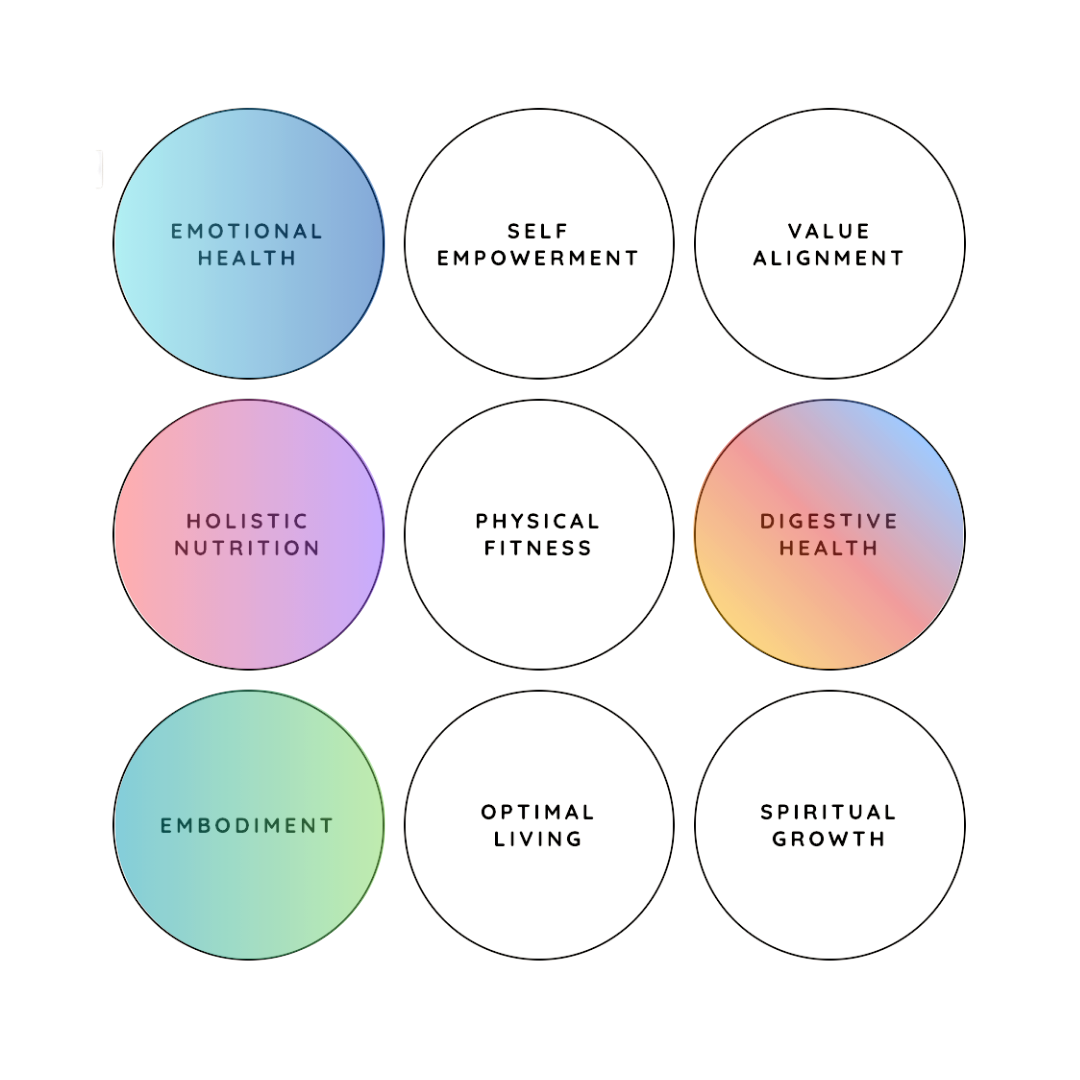
Everything we’ve been touching on here is rooted in SPRIT Element 7: Embodiment within the Nine Elements of Nourishment framework, with gentle support from MIND Element 1–Emotional Health and BODY Element 6–Digestive Health & Element 4 – Holistic Nutrition.
Holistic Guide to Thriving as a Highly-Sensitive Human
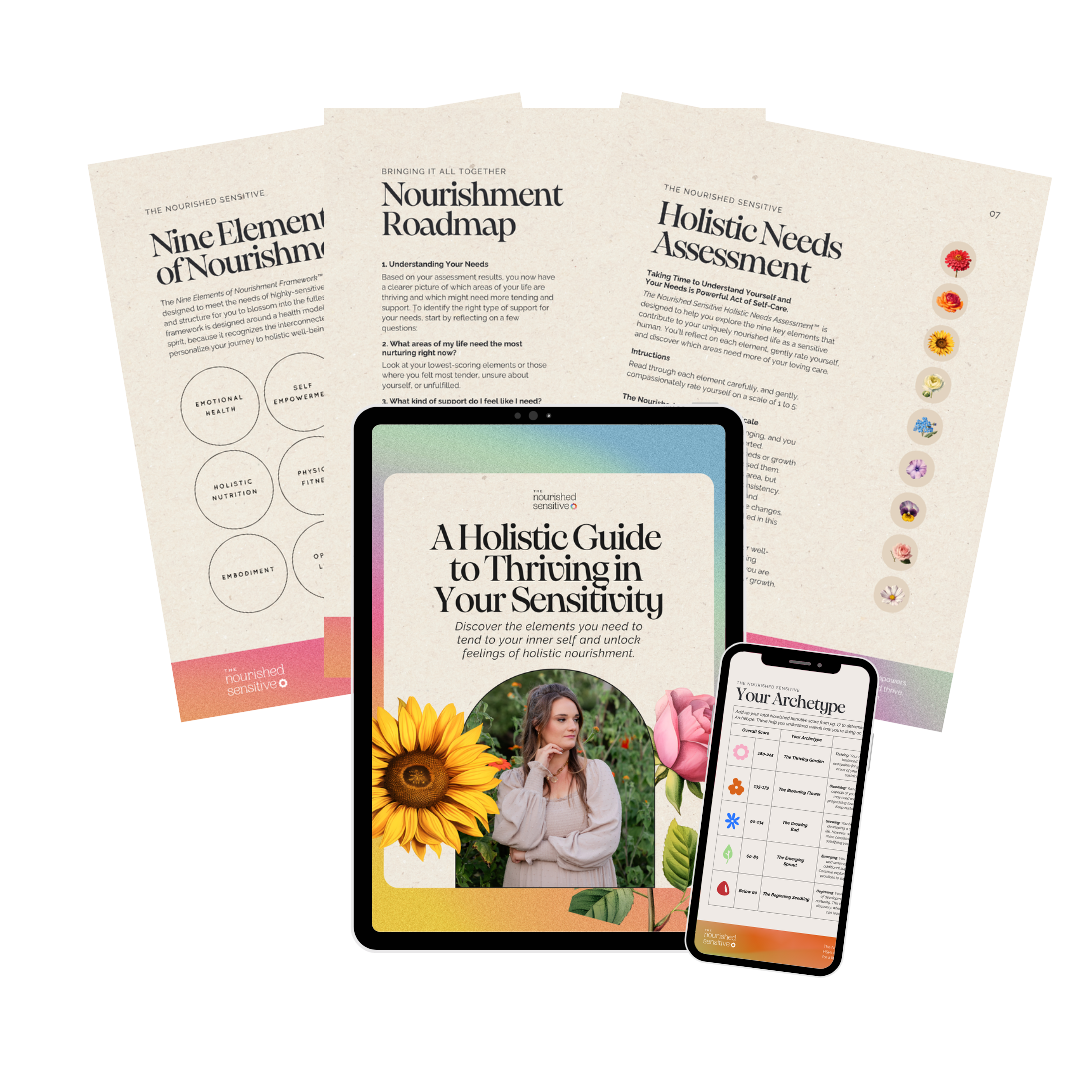
When you subscribe to The Nourished Sensitive Magazine on any tier, you’ll receive a download of the Holistic Guide to Thriving for Highly Sensitive People. Inside, you can learn more about the TNS Nine Elements of Nourishment Framework, complete your holistic needs assessment to see which elements you personally need to thrive, and discover your unique TNS Growth Archetype.
Circle: Holistic Holiday Reset for the Sensitive Mind-Body with Leah (Founder of TNS)
I hope these holistic embodiment tips, insights, and practices have been nourishing for you as you navigate your post-holiday season.
Maybe these are enough for you to get started on your own, or maybe you need a little extra support and hand holding.
Both options are totally okay.
Either way, if you’re feeling drained, overstimulated, or a little disconnected from yourself after the holidays (and you know you need something gentler than another “reset plan”) this may be exactly what your body has been asking for.
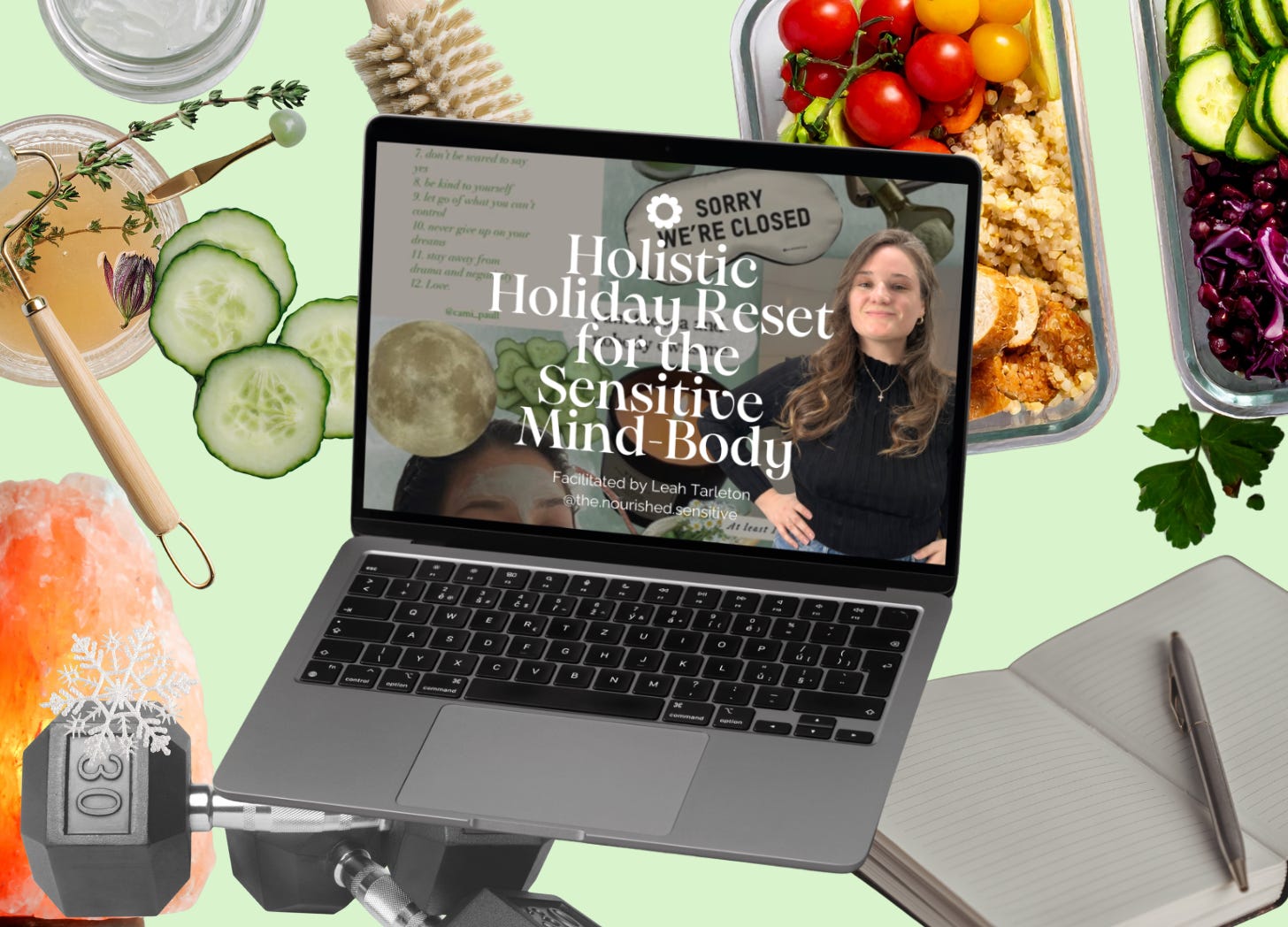
Holistic Holiday Reset for the Sensitive Mind-Body with Leah
Date: Monday, January 12
Time: 6:30–7:45 PM ET
A soft post-Christmas recalibration for sensitive and neurodivergent humans; grounding somatic practices, simple nourishment rhythms, and compassionate body check-ins to help you settle back into steadiness. Save your spot by clicking the button below:
A Note About Access
Sensitive Sanctuary Circles, Workshops, and other TNS gatherings are open to everyone, regardless of membership status. If you attend from outside the membership, we receive you as an honored and welcomed guest. Guests do not receive the circle replays. We keep those within our sacred community container.
TNSC Members attend for free as part of membership, with full access to every gathering, invitation, and community space.
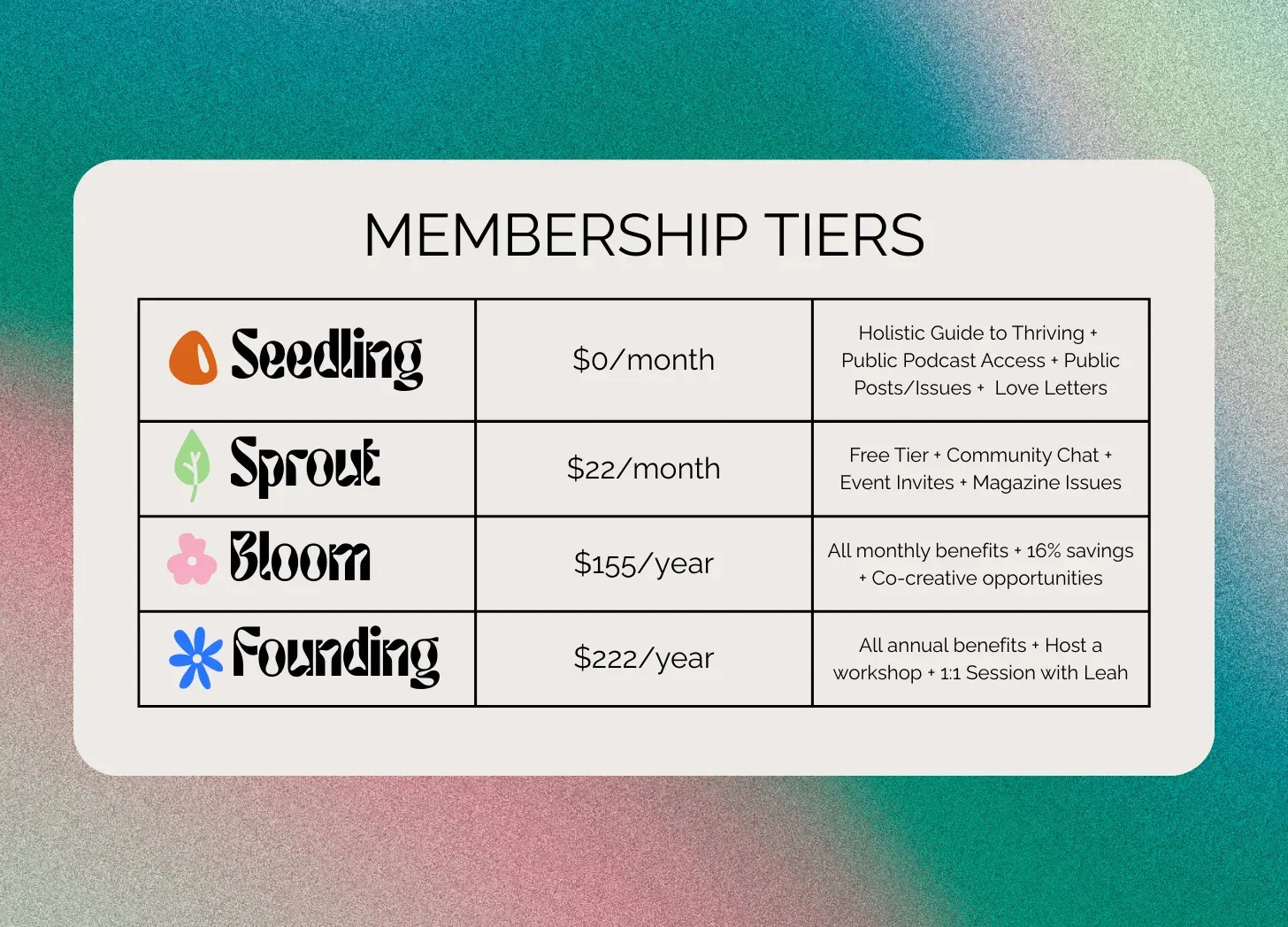
Guests are warmly welcome to join any circle for $22.
First timers are welcome to join for FREE with Coupon Code: FIRSTCIRCLEFREE
If you’d like to attend regularly and the cost isn’t accessible for you right now, or you have questions about the circle, please reach out to Leah directly at leah@nourishedsensitive.com.
If you’ve been curious about our events, or want to deepen into the sanctuary we’re building together, you’re warmly invited to upgrade your membership to receive all future invitations and to help sustain this gentle, soul-centered community sanctuary.
What is Sensitive Sanctuary Circle?
Think of Sensitive Sanctuary Circle as a soft pocket of time where nothing is required of you. No fixing, no masking—just come as you are, and snuggle into belonging with your fellow sensitives and NDs.


This space is for highly sensitive and neurodivergent, deep-hearted folks who feel deeply and are learning to honor their nervous systems. We gather for presence, reflection, and gentle belonging. Tears, laughter, silence, and story are all welcome.
What We Do
We keep things simple: a grounding practice, a brief theme + journaling prompt, then open space for sharing or quiet listening. We close with a blessing and an optional card pull.
What to Expect
🌱 Camera on or off—your choice (most keep them on).
🌱 Speaking is optional—share, pass, or use the chat.
🌱 Small, intimate groups (6–12 people).
🌱 Free to move, stretch, fidget, stim, or step away.
🌱 We meet 6:15–7:30pm ET.
Comfort + Care
Cameras encouraged but never required; a quick goodbye in chat if leaving early is appreciated.
No pressure to perform or say the “right thing.”
Gentle structure: grounding → check-ins → closing blessing.
Accessibility-minded: bodies and nervous systems welcome as they are.
Confidentiality held with care; recordings only with group consent.
No prep needed—bring a journal or tea if you’d like.
If you’ve been longing for slower, more genuine connection—or simply a place where you don’t have to hold everything together—Sensitive Sanctuary Circle is for you. 🌿
For details, see the full Sensitive Sanctuary Circle – Participation Agreement
For any questions, you can reach Leah at leah@nourishedsensitive.com.