



Why am I like this?
Have you ever had the feeling that you’re almost fluent in yourself, but not quite?
Like you can name your patterns, track your triggers, sense what’s happening in a room before anyone speaks, and still, there’s this lingering confusion or even self-judgement underneath it all.
Why does everything hit so deeply? Why do I do fine for a while… and then crash? Why am I like this?
Maybe you’ve tried to solve it the responsible way: research, podcasts, checklists, personality frameworks, coaching,maybe even diagnostic rabbit holes at 2 a.m. ChatGPT therapy, anyone?
You’ve wondered if you’re highly sensitive, autistic, ADHD, intense, gifted, or some layered combination that doesn’t fit neatly into any one explanation.
And at the same time, you’ve learned to “do life” in a way that keeps things looking steady from the outside.
You hold it together. You perform competence. You edit yourself in real time. You second-guess what you want to say, how you want to say it, how it might land. You’ve probably been called intense, or dramatic, or “too in your head.” And you’ve probably swallowed and hidden a lot of your truth just to keep the peace.
If you’re a recovering perfectionist, you know this particular ache: the endless effort to be “okay” can start to feel like a full-time job. Even rest becomes something to optimize. Even healing can become another place you strive.
But what if the next step isn’t more fixing, more polishing, more pushing?
What if it’s simply understanding the shape of your sensitivity, whether it’s emotional, sensory, cognitive, or intuitive, and giving it room to breathe without apology?
If something in you just softened while reading this…
If any part of you has been craving clarity, self-trust, or permission to be as you are, you’re invited to join this week’s Circle inside The Nourished Sensitive Collective.
Unmasking the Spectrum of Sensitivity: Reclaiming Your Sensitivity for Greater Authenticity
Monday, December 22 · 6:30–7:45 PM (group meets biweekly)
Save your seat → https://luma.com/n5i259du
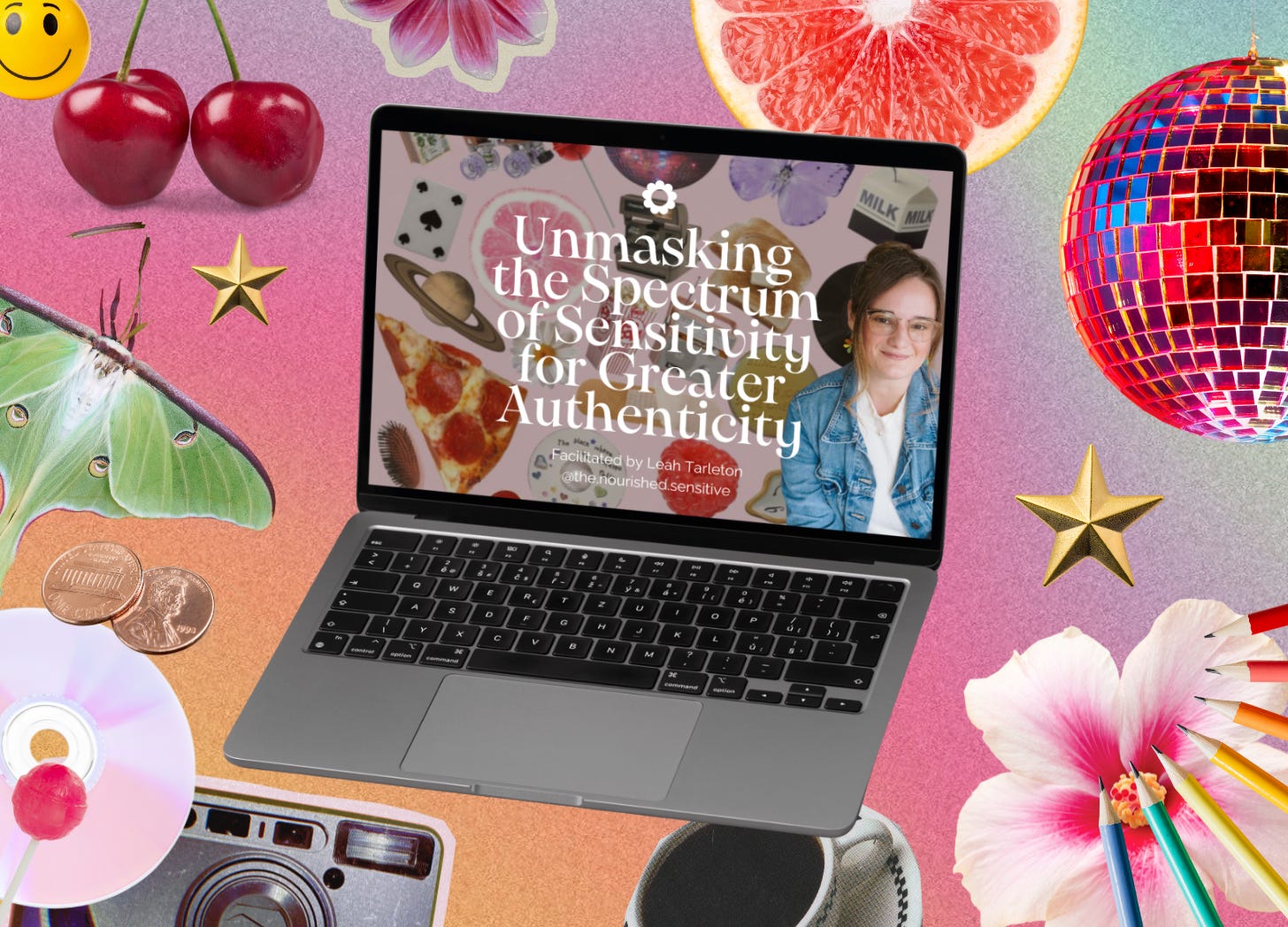
Making Sense of the Sensitivity Spectrum Without Turning Yourself Into a Problem to Solve
One of the quiet harms many sensitive and neurodivergent people carry is the belief that we must correctly identify ourselves before we’re allowed to trust our experience.
I know this one well, because I’ve lived inside that question for years. The endless researching. The wondering if this framework, or that coaching container, or some label would finally explain why things felt harder, deeper, louder, or more exhausting than they seemed to be for everyone else.
As if landing on the “right” label will finally grant me rest.
In reality, sensitivity often lives on a spectrum, not inside a single category. It’s shaped by nervous system wiring, lived experience, environment, and survival strategies. Not just personality traits or diagnoses.
Here are some of the threads that helped me (and many others) make a little more sense of it.
Lesson #1: Sensitivity shows up in more ways than we were taught to notice
Sensitivity isn’t just one thing, and it isn’t only about emotions. Many people experience it in layered, overlapping ways:
Sensory sensitivity
Heightened awareness of light, sound, textures, temperature, smell, or movement. Crowded spaces, bright rooms, or constant noise can quickly lead to fatigue or shutdown. Not because you’re weak, but because your system takes in more data.Emotional sensitivity
Deep empathy, strong emotional resonance, and a tendency to feel others’ moods as if they’re your own. Emotions may linger longer in your body, and you may process them more slowly and thoroughly.Cognitive sensitivity
A mind that connects dots quickly, thinks in layers, or struggles to “shut off.” This can look like creativity and insight, or mental exhaustion from constant processing. This is the form of sensitivity I personally relate to most as an autistic ADHDer. My brain rarely goes quiet, and there are moments I genuinely wish I could turn it off, just to rest inside my own head for a while.Intuitive sensitivity
Picking up on tone, timing, energy, and what’s unspoken. Trusting this kind of knowing can feel risky when you’ve been told it’s “too subjective,” but for many of us, it’s one of our clearest internal signals.
You may recognize yourself in several of these at once. That overlap doesn’t mean you’re scattered or “too much.” It often means your nervous system is finely tuned.
Reflection: Which forms of sensitivity feel most familiar to you right now, and which have you learned to downplay?
Lesson #2: Masking isn’t a flaw—it’s an intelligent survival response
Masking doesn’t appear out of nowhere. Masking didn’t start because we wanted to be inauthentic. It started because being ourselves didn’t always feel safe.

When your natural responses are misunderstood, criticized, or ignored, your system adapts. Masking becomes a way to stay safe, included, or functional.
Personally, I learned early how to read the room, adjust my tone, soften my reactions, and keep moving even when my body wanted to stop. At the time, it worked.
Over time, though, it can start to show up as:
Constant self-monitoring (“Am I saying the right thing?”) or self-editing before you speak
Performing calm, competence, or positivity while feeling overwhelmed inside
Pushing through exhaustion because slowing down feels unsafe or like failure
Losing touch with your own needs, preferences, or limits
Feeling relief when alone, but guilt for needing that space
Masking is a skill. A smart one. But when it becomes constant, it can quietly drain your system and lead to cycles of burnout.
Recognizing masking isn’t about judging yourself. It’s about noticing when it’s protective, and when it’s costing you too much. It’s actually noticing if your system is asking for something different this time.
In our circle this week, we’ll explore the gentle process of unmasking so we can come into contact with a version of ourselves that feels true, easy, and at peace.
Lesson #3: HSP, Autism, ADHD, Giftedness, Intensity… different lenses, shared terrain
Many people I know, and many conversations I’ve had myself, circle around this question: Which one am I?
The truth is, these frameworks often describe overlapping nervous system traits, especially for adults who’ve spent years adapting, compensating, or over-functioning.
A few gentle distinctions:
Highly Sensitive Person (HSP)
Often involves deep processing, empathy, and sensitivity to stimulation. Many HSPs don’t see themselves reflected in traditional diagnostic language, but still feel deeply impacted by their environments.Autism
A neurodevelopmental difference affecting sensory processing, communication, pattern recognition, and social experience. Autistic sensitivity often includes sensory differences, deep focus, and unique relational rhythms. My experience of autism is basically: sensitivity dialed all the way up to 100.ADHD
Involves differences in attention regulation and emotional processing. Sensitivity can show up as intensity, overwhelm, or burnout from constant self-management.
Giftedness / Intensity
Heightened cognitive, emotional, or imaginative capacities that can feel like “too muchness” without the right support. These resemble both HSP and neurodivergent traits, and many gifted adults learn early to dim themselves.
Many people live at the crossroads of these identities. Especially those who are late-identified, self-diagnosed, or have spent years compensating instead of being supported.
What matters most isn’t choosing the perfect label. It’s understanding how your system works and what it needs. This brings both clarity and compassion.
Reclaiming Sensitivity as a Strength You Don’t Have to Earn, Prove, Mask, or Apologize for.
One of the biggest shifts that we can learn is realizing that sensitivity and neurodivergence aren’t flaws to be managed. They are sources of perception, depth, and wisdom.
The work isn’t becoming less sensitive.
It’s becoming less at war with your own nature.
Unmasking doesn’t mean revealing everything or pushing past your edges. It means choosing environments, relationships, and rhythms that don’t require you to disappear.
Some practices that support safe, gentle unmasking in community:
Pacing honesty
Sharing in layers, not all at once. Letting trust build slowly and noticing when your body says “this is enough for now.”Listening to your body first
Tracking sensations of tightening, softening, fatigue, or relief, especially before and after social interaction. You can use this as a guide in deciding how much to engage, and what your body actually needs.Naming needs without over-explaining
Practicing rest, quiet, or boundaries without turning them into a defense. There is no need to explain or apologize for them.Allowing yourself to be witnessed
Allowing yourself to be seen in your truth without rushing to reframe, fix, perform resilience, or make it palatable.Choosing resonance over approval
Letting connection come from mutual attunement instead of self-abandonment.
This is the kind of unmasking that restores energy instead of draining it. The kind that feels like coming home.
Your sensitivity has always been intelligent and trying to protect you. The invitation now is to let it guide you, gently, back to yourself.
Exploring Element 2: Self-Empowerment
Unmasking your sensitivity isn’t about stripping everything away at once. It’s about choosing yourself in small, steady ways, often long before anything looks different on the outside.
This is where Element 2: Self-Empowerment in the Nine Elements of Nourishment™ framework comes in.
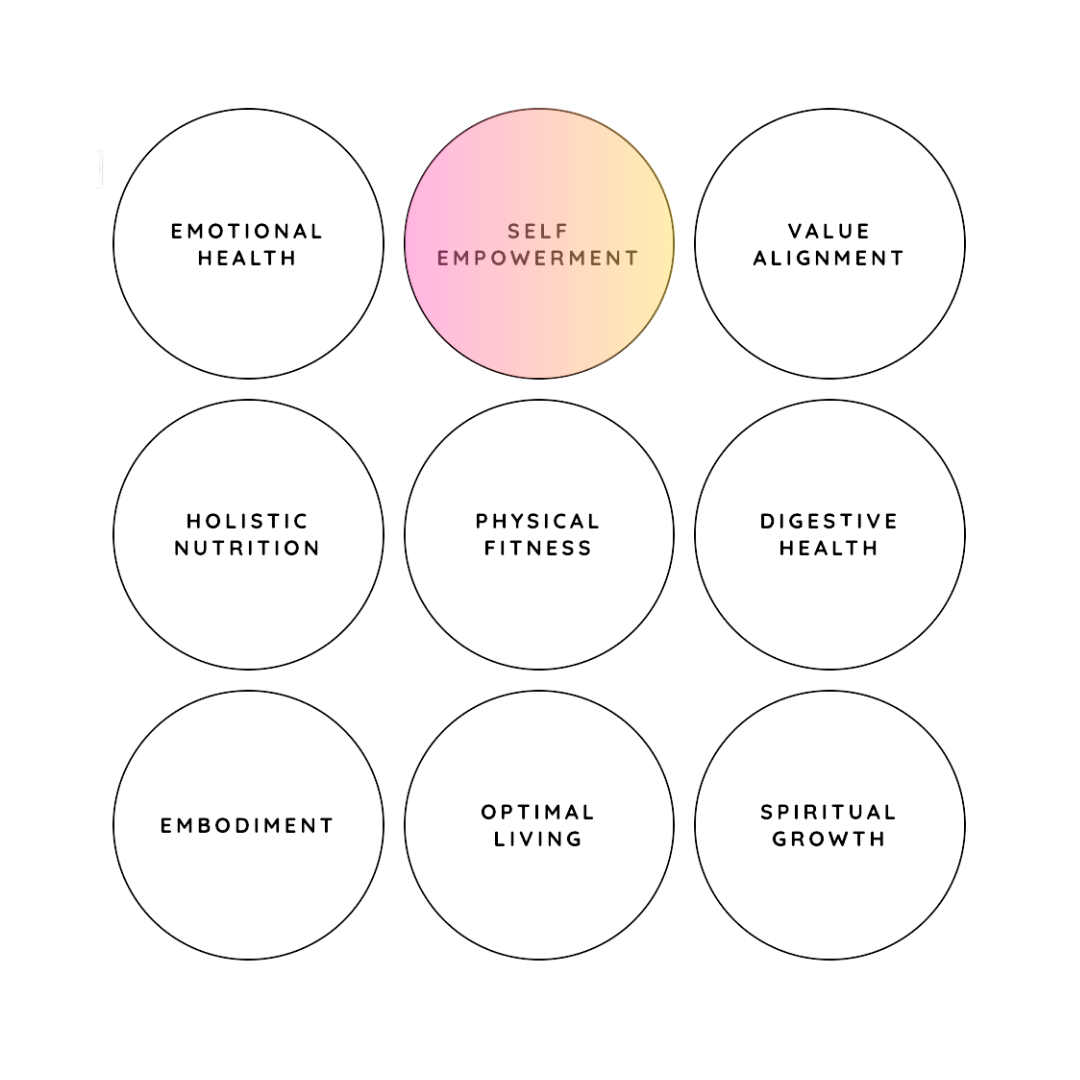
Self-empowerment isn’t forceful or loud. It doesn’t ask you to harden, hustle, or prove anything. It’s the quiet confidence that grows when you begin to trust your inner signals again. When you let your truth take root instead of constantly adjusting it to fit the environment.
For sensitive and neurodivergent people, reclaiming self-empowerment often begins with allowing your sensitivity to exist without justification. Noticing what nourishes you. Noticing what depletes you. And giving yourself permission to respond; gently, consistently, and without apology.
Just like a plant doesn’t rush its own unfolding, self-empowerment asks for patience. It asks you to move at the pace your nervous system can sustain. To create conditions that support growth rather than demand performance.
When you honor your needs instead of overriding them, you’re practicing self-empowerment.
When you choose honesty over masking, even in subtle ways, you’re strengthening your authentic roots.
When you let your sensitivity guide your decisions instead of arguing with it, you’re tending to something alive and wise within you.
This isn’t about becoming someone new. It’s about remembering the version of you that knew how to listen and trust, before you learned to self-abandon.
So if something in you feels ready to grow differently, to root into who you are rather than who you’ve been trying to be, consider this your invitation to join us for our upcoming Sensitive Sanctuary Circle on Monday, December 22 (6:30–7:45 PM).
Unmasking the Spectrum of Sensitivity: Reclaiming Your Sensitivity for Greater Authenticity
If you’re feeling tired of trying to figure yourself out, exhausted from years of masking, or quietly wondering where you actually belong on the spectrum of sensitivity, this space is for you.
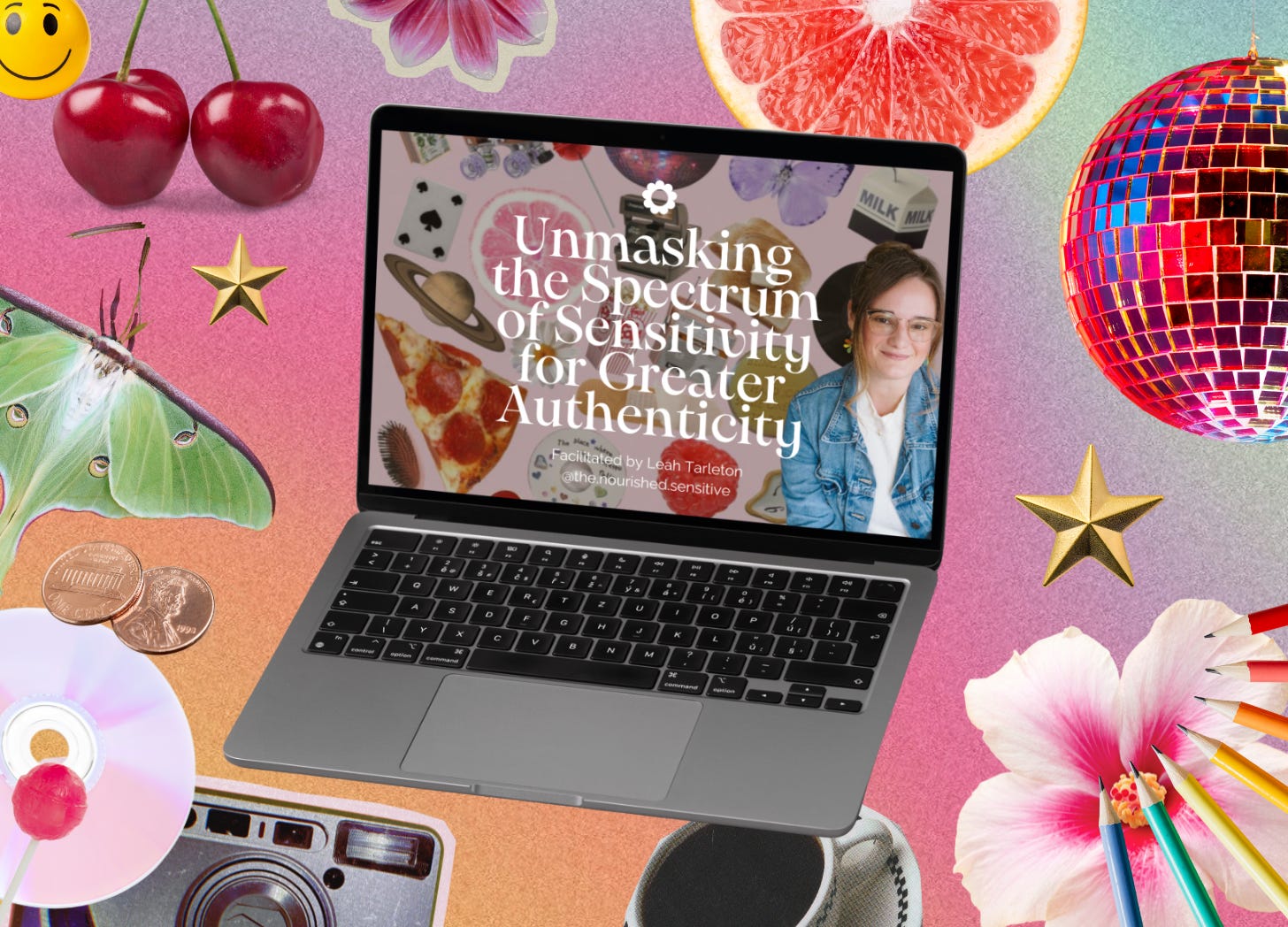
Unmasking the Spectrum of Sensitivity: Reclaiming Your Sensitivity for Greater Authenticity
Date: Monday, December 22
Time: 6:30–7:45 PM ET
RSVP: https://luma.com/n5i259du
This Sanctuary Circle is a gentle, spacious exploration for highly sensitive and neurodivergent people navigating a world that often feels too loud, too fast, or too demanding. Together, we’ll explore the many expressions of sensitivity (emotional, sensory, cognitive, and intuitive) and how these traits intersect with identities like HSP, Autism, ADHD, giftedness, and intensity.
We’ll talk honestly about masking: why it develops, how it protects us, and how it can quietly lead to disconnection and burnout over time. You’ll be invited into reflective practices that support safe, gentle unmasking without pressure to share more than feels right.
This is a space for listening, witnessing, and remembering that your sensitivity is not a flaw, but a source of insight and strength.
If you’re longing for language, clarity, and a sense of being understood, without needing to perform, explain, or fix yourself, this Circle offers a grounded place to land.
You can save your spot here: https://luma.com/n5i259du
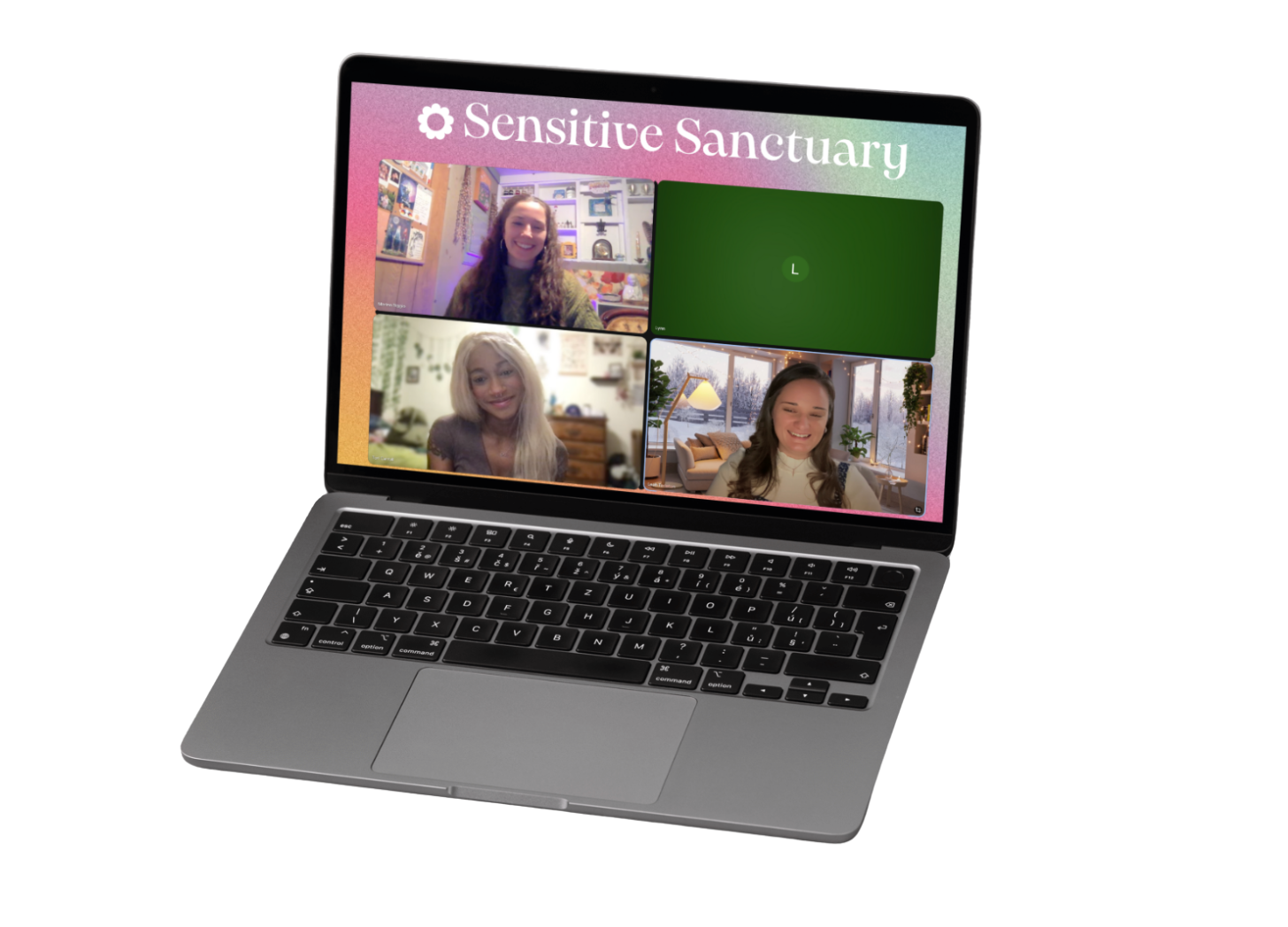
What is Sensitive Sanctuary Circle?
Think of Sensitive Sanctuary Circle as a soft pocket of time where nothing is required of you. No fixing, no masking—just come as you are, and snuggle into belonging with your fellow sensitives and NDs.
Who This Space is For:
This space is for highly sensitive and neurodivergent, soulful, deep-hearted folks who feel deeply and are learning to honor their nervous systems. We gather for presence, reflection, and gentle belonging. We share a space of mutual growth and care.
What We Do
We keep things simple: a grounding practice, a brief theme + journaling prompt, then open space for sharing or quiet listening. We close with a blessing and an optional card pull.
What to Expect
Small, intimate groups (6–12 people).
Tears, laughter, silence, and story are all welcome.
Cameras encouraged but never required; a quick goodbye in chat if leaving early is appreciated.
Speaking is optional—share, pass, or use the chat.
Gentle structure: grounding → check-ins → closing blessing.
Accessibility-minded: bodies and nervous systems welcome as they are. Free to move, stretch, fidget, stim, or step away.
No prep needed—bring a journal or tea if you’d like.
For any questions, you can reach Leah at leah@nourishedsensitive.com.
A Note About Access
Sensitive Sanctuary Circles and TNS gathering are open to everyone.
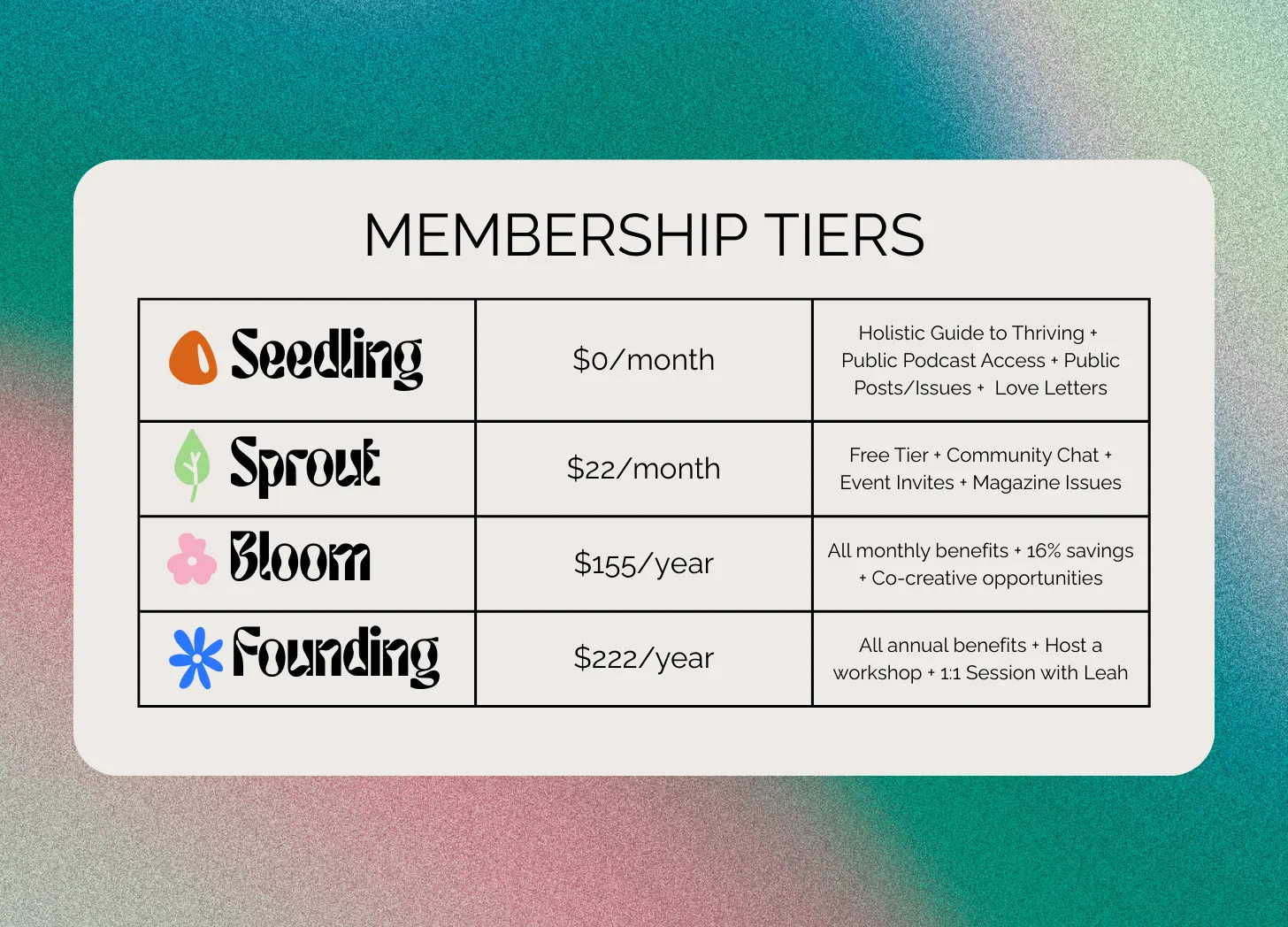
TNSC Members attend for free as part of membership, with full access to every gathering, invitation, and community space.
Guests are warmly welcome to join any circle for $22.
First timers are welcome to join for FREE with Coupon Code: FIRSTCIRCLEFREE
If you’d like to attend regularly and the cost isn’t accessible for you right now, or you have questions about the circle, please reach out to Leah directly at leah@nourishedsensitive.com.
If you’ve been curious about our events, or want to deepen into the sanctuary we’re building together, you’re warmly invited to upgrade your membership to receive all future invitations and to help sustain this gentle, soul-centered community sanctuary.

Angeli (@soulfulassistance) is a writer and virtual assistant with a background in psychology who loves shaping big feelings into clear, comforting words. She supports soulful, sensitive brands with storytelling that’s warm, grounded, and easy to read. When she’s not writing, she’s probably buried in a fantasy book, nerding out over true crime, doing Pilates, or planning her next trip. @angeliwrites
My whole life in a nut shell. Thanks for sharing.
This article was very helpful!